

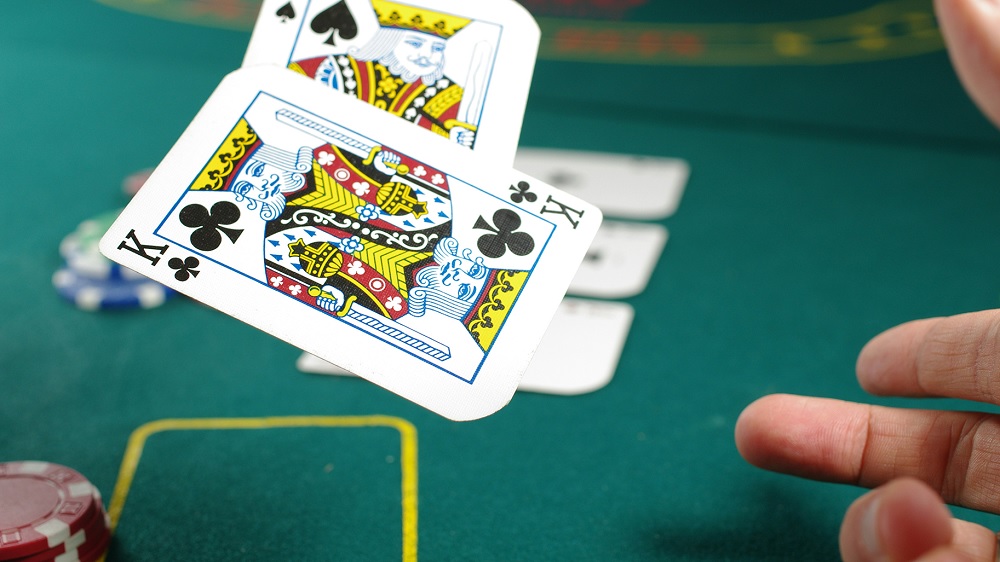
Introduction: More Than Just a Game of Cards
Poker is often romanticized in film, whispered about in backroom conversations, and studied rigorously by statisticians, psychologists, and professional players alike. Yet, beyond the chips, bluffs, and final showdowns, poker is a masterclass in human behavior, probability, and decision-making. It is one of the few games that seamlessly marries skill with chance, intellect with intuition, and patience with aggression. With roots stretching back centuries and a presence both in opulent casinos and humble kitchen tables, poker has become a timeless pursuit that continues to captivate minds around the world.
The History of Poker: From Riverboats to Global Fame
Poker’s origins are somewhat contested, though most historians trace its evolution to early 19th-century America. It was first widely documented on Mississippi riverboats where gamblers would engage in a rudimentary version using a 20-card deck. Over time, the game evolved into its current 52-card format and expanded across the country, finding a natural home in saloons and gambling halls of the Old West.
The 20th century marked a period of transformation. The introduction of new variations such as Texas Hold’em and Omaha added complexity and excitement. In 1970, the World Series of Poker (WSOP) was founded, propelling poker into the mainstream. The 2000s ushered in the “poker boom,” thanks to televised tournaments and the rise of online poker rooms. Suddenly, the game was not just for professionals—it was for anyone with a computer, a bit of courage, and a dream of going “all in.”
Understanding the Basics: How Poker is Played
Poker is not a singular game but a family of games sharing similar rules centered around betting and hand rankings. Among the many variants, Texas Hold’em reigns supreme in both popularity and media coverage.
Key Components of Poker Gameplay:
-
The Deal: Players are dealt cards—either hidden (hole cards) or visible (community cards)—depending on the variation
-
Betting Rounds: Players wager chips in multiple rounds, evaluating their hands in relation to potential outcomes
-
Hand Rankings: From highest to lowest—Royal Flush, Straight Flush, Four of a Kind, Full House, Flush, Straight, Three of a Kind, Two Pair, One Pair, High Card
-
Winning the Pot: A player can win by having the best hand at showdown or by making all other players fold through betting and bluffing
Despite its simple premise, poker becomes exponentially more complex as one considers position, odds, psychology, and table dynamics.
The Strategy: Balancing Logic with Instinct
At the heart of poker lies strategic decision-making. Unlike games dominated by luck, such as roulette or slots, poker allows for a skilled player to consistently outperform less experienced opponents over time.
Essential Elements of Poker Strategy:
-
Position: Acting later in a betting round provides more information and often a tactical advantage
-
Pot Odds and Expected Value: Understanding the mathematical likelihood of completing a hand versus the risk of betting
-
Reading Opponents: Observing behavioral cues, betting patterns, and emotional responses to deduce hand strength
-
Bluffing and Semi-Bluffing: Deceiving opponents with bets that suggest a stronger hand than one holds, or betting with a hand that may improve
In poker, every action tells a story. The best players learn not only to write their own but to read those of others with surgical precision.
The Psychology of Poker: Inside the Mind of a Player
Poker is as much a psychological duel as it is a card game. It is a constant battle of perception, confidence, and emotional control. The ability to maintain composure—known as “poker face”—can often be the difference between a well-earned win and a costly mistake.
Psychological Aspects of Poker:
-
Tilt: A state of emotional frustration that leads to poor decisions
-
Confidence vs Arrogance: Knowing when to assert dominance and when to retreat
-
Risk Tolerance: Understanding and managing your comfort with loss and variance
-
Adaptability: Adjusting strategies based on shifting player behavior and table dynamics
Mastering the psychological side of poker requires as much discipline as it does intuition, blending logic with the human element in a uniquely compelling way.
Online Poker: Convenience Meets Competition
The digital age has profoundly shaped the way poker is played. Online platforms have democratized access, allowing players of all skill levels to compete globally at any hour. Tournaments with massive prize pools, quick sit-and-go games, and free practice rooms offer something for everyone.
Advantages of Online Poker:
-
Accessibility: Play from anywhere with an internet connection
-
Variety: Wide range of game formats and stakes
-
Speed: Faster hands and more games per hour than live settings
-
Data and Tools: Use of software for tracking performance and studying opponents
Yet, online poker also removes some of the tactile and social elements of live play. Reading physical tells is impossible, replaced instead by timing tells and betting habits. Nonetheless, the core mechanics and psychological warfare remain intact.
Tournaments vs Cash Games: Different Roads to Glory
Poker offers multiple paths for enthusiasts, each with its own structure, pace, and strategic focus.
Cash Games:
-
Real-money chips represent actual value
-
Players can buy in or cash out at any time
-
Strategy emphasizes maximizing value over many hands
Tournaments:
-
Fixed buy-in with prize pools based on entries
-
Players are eliminated until one winner remains
-
Emphasizes chip conservation, blind structure adaptation, and survival strategy
Both formats demand different mindsets, and many players gravitate toward one while mastering the intricacies of the other.
Poker in Pop Culture and Society
Poker has long captured the imagination of filmmakers, writers, and musicians. Iconic films like Rounders, Casino Royale, and Maverick portray the high stakes, tense bluffs, and larger-than-life personalities that inhabit the poker world. The game symbolizes individualism, intelligence, and daring—a contest of courage against odds.
Furthermore, poker has transcended the casino to become a metaphor in business, politics, and life itself. Phrases like “play your cards right,” “raise the stakes,” or “call their bluff” are rooted in poker, underscoring its influence on language and thought.
Conclusion: The Game That Never Folds
Poker is not just a game—it is an ever-evolving craft, a test of mind and mettle, and a window into the complex interplay of chance and control. From its humble beginnings to its high-stakes modern-day tournaments, poker continues to evolve while retaining the soul of a timeless competition.
Whether you’re playing for pennies with friends or eyeing a World Series bracelet, the essence remains the same. In poker, every decision is a declaration, every hand a story, and every victory a blend of boldness, brains, and the occasional lucky break.
In the grand theater of games, poker stands alone—not just as a pastime, but as a pursuit of mastery.

Comments are closed.