

Introduction: More Than Just a Deck
There is something enduringly magical about a deck of cards. Neatly compact, elegantly illustrated, and endlessly versatile, playing cards have transcended borders and centuries. A single deck can birth countless experiences—from quiet evenings around a kitchen table to high-stakes games beneath the dazzling lights of a casino. Card games are far more than mere entertainment; they are cultural artifacts, exercises in strategy, and instruments of human connection. Whether it’s the bluff of poker, the precision of bridge, or the spontaneity of Uno, card games reflect the art and instinct of play in its purest form.
A Brief History: From the East to the West
The origins of card games stretch back over a millennium, with most historians agreeing that playing cards first emerged in 9th-century China. These early cards, painted with figures and symbols, were more akin to miniature artworks than modern-day game tools. From China, the concept traveled to the Islamic world and then into Europe via trade routes by the late 14th century.
European playing cards evolved rapidly, leading to the creation of suits and standardized decks. France’s contribution—the hearts, diamonds, spades, and clubs—remains the international standard today. By the 18th century, card games had become fashionable diversions among European aristocrats, later permeating every level of society. As the cards spread, so too did the games—each culture developing its own rules, rituals, and strategies.
The Anatomy of a Deck: More Than Meets the Eye
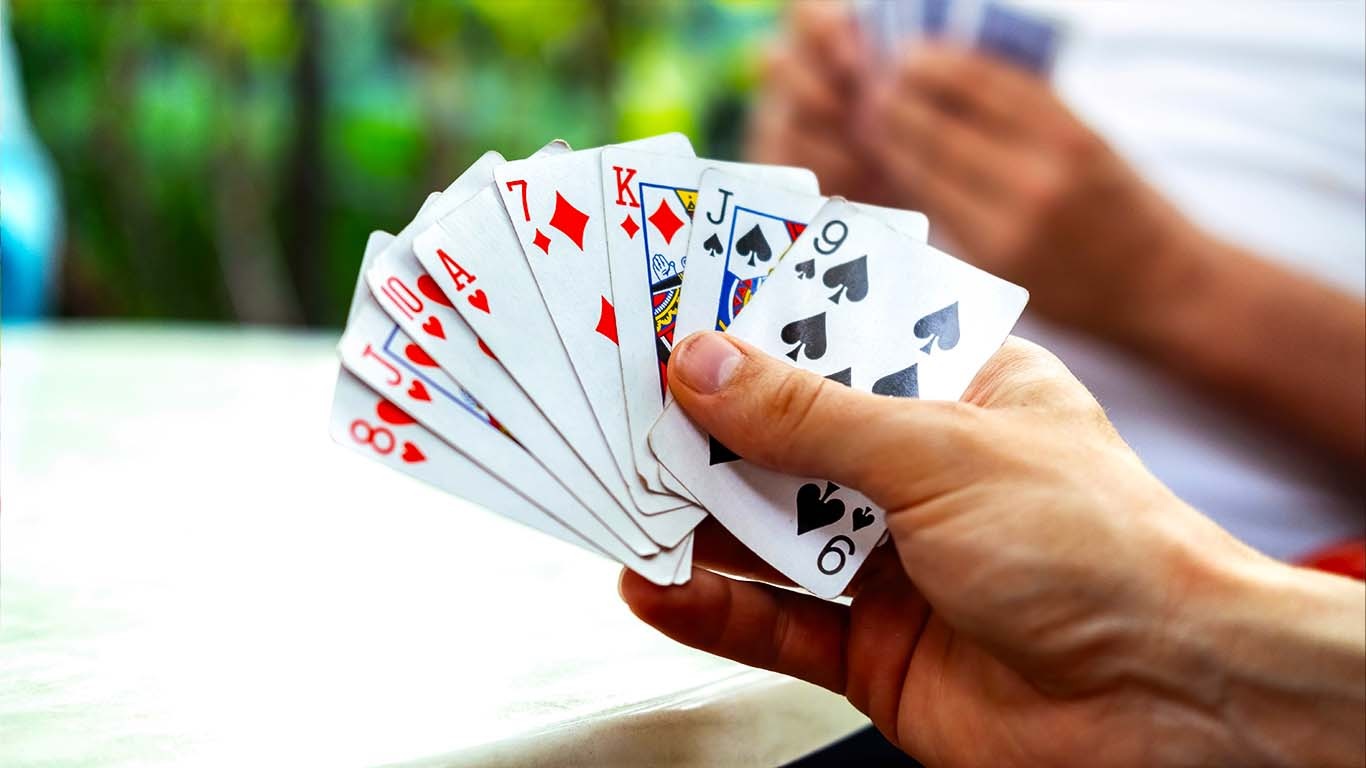
A standard 52-card deck might seem simple, yet it holds a world of possibility. Four suits, each with thirteen ranks, yield endless combinations. Add in jokers, and you unlock even more game variants. The deck’s elegance lies in its adaptability: the same cards that fuel the logical rigor of bridge can also support the casual fun of Go Fish.
What’s fascinating is how the deck mirrors aspects of the human condition. Kings and queens hint at power structures; hearts and spades evoke emotion and war. Over time, the symbolism of cards has influenced literature, art, and even political discourse.
Categories of Card Games: A Game for Every Mind
Card games are as diverse as the people who play them. They can be broadly classified into several categories, each catering to different styles of thinking and play.
1. Trick-Taking Games
These games revolve around rounds or “tricks” where players each play a card, and the highest wins.
-
Examples: Bridge, Spades, Hearts, Pinochle
-
Skills: Communication, timing, memory, and team strategy
2. Matching and Shedding Games
Players match cards by rank or suit and aim to be the first to discard all their cards.
-
Examples: Uno, Crazy Eights, Phase 10
-
Skills: Quick decision-making, hand management
3. Comparing Games
Often associated with gambling, these games involve comparing hand values.
-
Examples: Poker, Blackjack, Baccarat
-
Skills: Bluffing, probability assessment, risk management
4. Solitaire Games
Designed for single players, these games are meditative yet mentally stimulating.
-
Examples: Klondike, Spider, FreeCell
-
Skills: Patience, planning, spatial reasoning
Each category appeals to different sensibilities, from the mathematically inclined to the creatively competitive.
Card Games as Social Glue
Card games are remarkable for their ability to bring people together. Around a table, differences in age, background, or language often dissolve. Whether it’s grandparents teaching grandkids how to play Rummy, or friends gathering for a night of Texas Hold’em, card games foster dialogue, laughter, and shared memories.
In many cultures, card games form part of family traditions, holiday gatherings, or community events. Their accessibility—no need for expensive equipment or elaborate rules—ensures that anyone can join in. Moreover, they serve as informal classrooms, subtly teaching mathematics, logic, negotiation, and patience.
The Strategic Depth: Not Just Luck
While chance plays a role in most card games, the best players understand that strategy often determines the outcome. Games like bridge and poker require not only mathematical insight but also psychological intuition. Reading opponents, remembering past plays, and calculating probabilities are skills honed through years of practice.
Some of the world’s most respected thinkers have championed card games as intellectual pursuits. Charles Darwin played whist to sharpen his concentration. Warren Buffett and Bill Gates have praised bridge as the ultimate game of strategy and communication.
Even in games where luck is dominant, such as War or Go Fish, strategic timing and card awareness can turn the tide. This duality—luck and logic—keeps players engaged across skill levels.
The Digital Shift: Card Games in the Modern Era
The rise of smartphones and digital platforms has brought card games to a broader audience than ever before. Classics like Solitaire, Hearts, and Poker now exist in beautifully rendered online versions. Multiplayer modes allow people to challenge opponents across continents, while AI opponents provide increasingly sophisticated challenges.
Apps have also introduced new variations and hybrid games, blending traditional card mechanics with role-playing, storytelling, and fantasy themes. Meanwhile, live-streamed poker tournaments and online bridge clubs keep competitive card gaming vibrant and accessible.
Despite the shift to screens, the essence remains unchanged: anticipation, decision-making, and the thrill of an unexpected win.
Card Games in Pop Culture and Literature
Card games have long held symbolic weight in stories, films, and folklore. From James Bond’s tense Baccarat showdown in Casino Royale to the poetic metaphors of cards in Bob Dylan’s lyrics, the deck has served as a metaphor for fate, power, and cunning.
In literature, cards often mirror the randomness of life. They remind us that while we cannot control the hand we’re dealt, we can choose how to play it. This deeper symbolism is one reason card games continue to resonate across generations and mediums.
Conclusion: A Deck That Never Gathers Dust
The humble deck of cards is a masterpiece of design and cultural resilience. It bridges generations, transcends languages, and adapts effortlessly to new times. Whether used to pass time, forge bonds, test intellect, or tell stories, card games remain a vital part of human play.
In an era driven by fast-paced technology and fleeting distractions, the enduring presence of card games reminds us of the simple joys of mindful engagement. To sit down, shuffle a deck, and play is to participate in a centuries-old tradition—one that celebrates not just the luck of the draw, but the elegance of how we respond to it.

Comments are closed.